
Essential Football Terms for the World Cup
The FIFA World Cup is a global event that unites fans through a shared language of football. To fully engage with the tournament, understanding its core terminology is crucial. This vocabulary serves as the foundation for discussing the beautiful game, whether you're reading match reports, listening to commentary, or chatting with fellow supporters.
Key Positions and Formations
Football teams are structured with specific roles. The goalkeeper is the last line of defense, tasked with preventing the ball from entering the net. Outfield players are divided into defenders, midfielders, and forwards. Defenders, including centre-backs and full-backs, focus on stopping opposing attacks. Midfielders, such as defensive midfielders and attacking midfielders, control the flow of the game, linking defense to attack. Forwards, like strikers and wingers, are primarily responsible for scoring goals.
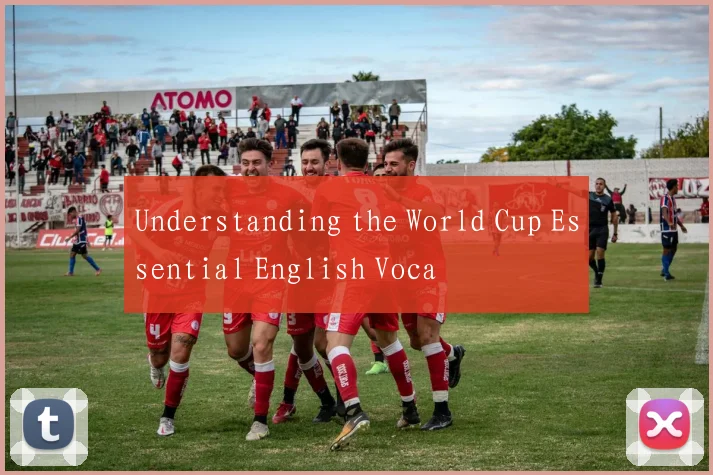
These players are organized into a formation, a numerical representation of their deployment on the pitch. Common formations include 4-3-3, 4-4-2, and 3-5-2. The choice of formation reflects a team's tactical approach, balancing defensive solidity with attacking threat.
Describing Match Action and Events
The dynamic nature of football is captured through a rich lexicon of action verbs and nouns. The primary objective is to score a goal. An attempt to score is a shot. A save is made by the goalkeeper to stop a shot. When a player legally takes the ball from an opponent, it is called a tackle. An assist is the final pass that leads directly to a goal.
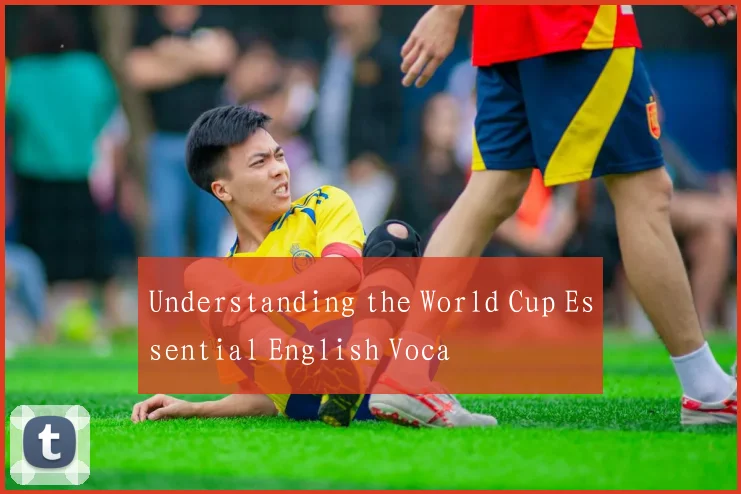
Match officials enforce the rules. A serious rule violation results in a foul. For severe fouls, the referee may issue a yellow card as a caution or a red card, which sends the player off. A foul committed by a defender inside their own penalty area leads to a penalty kick. When the ball goes out of play over the touchline, it is returned via a throw-in. If it crosses the goal line after last touching an attacker, a goal kick is awarded. If it last touched a defender, the attacking team gets a corner kick.
Tournament Structure and Phases
The World Cup is not a single event but a series of competitions with distinct stages, each with its own set of terms. Understanding this structure is key to following the narrative of the tournament.
Qualification and Group Stage
Most nations must compete in a lengthy qualification process within their continental confederations to earn a spot in the final tournament. The 32 qualified teams are then drawn into eight groups of four for the initial group stage. In this round-robin phase, each team plays the others in its group once. A win earns three points, a draw earns one, and a loss earns zero. Teams are ranked on the group table or standings based on total points, with tie-breakers including goal difference and goals scored. The top two teams from each group advance to the knockout stage.
Knockout Rounds and Decisive Moments
The knockout stage is a single-elimination format where a loss means exit from the tournament. This phase begins with the Round of 16, followed by the quarter-finals, semi-finals, and the final. If a knockout match is tied after 90 minutes of regulation time, it proceeds to 30 minutes of extra time. If the score remains level, the match is decided by a penalty shootout, a tense series of one-on-one kicks from the penalty spot. The match for third place is contested by the two losing semi-finalists.
Advanced Tactical and Statistical Vocabulary
For fans seeking a deeper analytical understanding, a range of terms describes team strategies and performance metrics.
Playing Styles and Tactics
Teams adopt distinct philosophies. A possession-based game focuses on controlling the ball to dictate play. Counter-attacking football involves defending deeply and then launching fast attacks when the ball is won. High press refers to putting intense pressure on opponents in their own half to force mistakes. Set pieces are rehearsed plays from dead-ball situations like free kicks and corners. A clean sheet is achieved when a team does not concede any goals in a match.
Key Performance Metrics
Modern football analysis relies heavily on statistics. Expected Goals (xG) is a metric that quantifies the quality of scoring chances, indicating how many goals a team or player "should" have scored based on the opportunities. Pass completion percentage measures a team's or player's passing accuracy. Ball possession percentage shows the proportion of time a team controls the ball. Defensive solidity is often measured by tackles won and interceptions.
Engaging with Media and Fellow Fans
The language of football extends beyond the pitch into pre- and post-match discussions, media coverage, and fan culture.
Pre-Match and Post-Match Analysis
Before a match, pundits discuss the starting lineup or XI and engage in match predictions. They analyze head-to-head records between the teams. After the match, the focus shifts to the post-match interview and analysis of key moments. The Man of the Match award is given to the best performer. A surprising victory by a weaker team is called an upset.
Fan Culture and Discussion
Fans are the lifeblood of the tournament. The supporters in the stadium are the crowd or spectators, whose collective support forms the atmosphere. A team's loyal followers are its fan base. A highly anticipated match is a blockbuster or showdown. A player in exceptional form is said to be on a hot streak or in red-hot form. The journey to the final is often called a team's campaign or road to the final.
Mastering this vocabulary enhances the experience of the World Cup. It allows fans to decode tactical broadcasts, participate in informed debates, and connect with a global community united by a passion for football. The shared understanding of these terms turns watching a game into a richer, more immersive global conversation.